


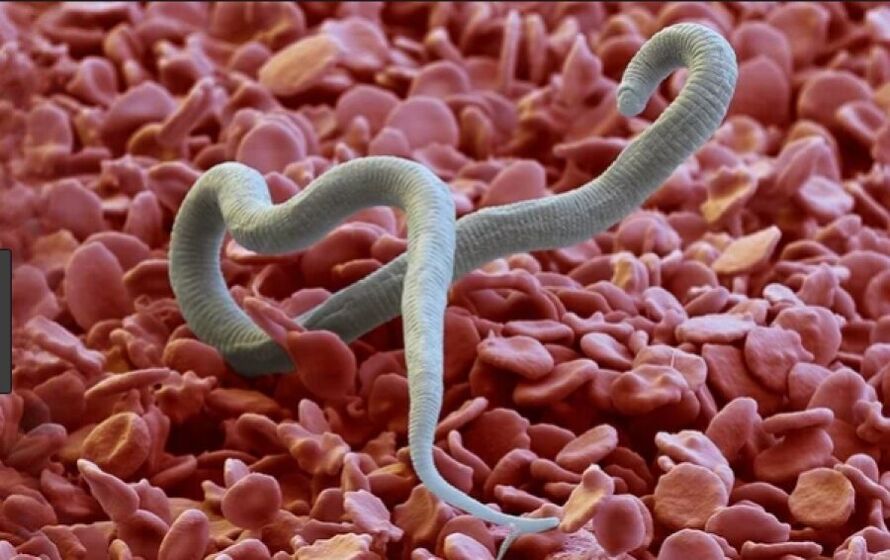
Helminthiasis- helminthic diseases caused by helminths - parasitic worms with round and flat, less often ringed and spiky heads.Helminthiasis is characterized by a chronic course and systemic effects in the body, with the development of abdominal, allergic, anemic syndromes and chronic toxicosis;damage to the lungs, liver, bile ducts, brain and vision.Laboratory (helminth-ovoscopic, helminth-larvoscopic, serological) and instrumental (x-ray, endoscopy, ultrasound, etc.) methods are used in the diagnosis of worm infections.Treatment of worm infections depends on the type of parasite and includes specific (anthelmintic) and pathogenetic therapy.
General information
Worm infections are helminth infections caused by various types of lower parasitic worms - worms.Helminthiasis has a chronic course, which is accompanied by exhaustion of the body and a decrease in its natural defenses.Leading places in the structure of helminthiasis are enterobiasis, ascariasis, hookworm, trichuriasis and toxocariasis.
According to official statistics, 1-2% of the population of our country is infected with helminthiasis, but in some regions it reaches 10% or even more.The problem of the increasing incidence of helminthiasis is relevant not only for infectious diseases, but also for pediatrics, therapy, surgery, gastroenterology, dermatology, allergology, urology and other practical medical fields.
Causes of helminthiasis
To date, the causative agent of more than 250 human helminthiasis is known;About 50 species are the most common among them.Helminths parasitizing the human body are mainly represented by roundworms (class Nematoda) and flatworms (class Trematoda and tapeworms - Cestoidea);Human infections by annelids (Annelida) and acanthocephala (Acanthocephala) occur less often.Representatives of roundworms include roundworms, roundworms, trichinella, whipworms;tapeworms - cattle, pig and dwarf tapeworms, echinococcus, broad tapeworm;flukes - cat and liver flukes.
The life cycle of helminths includes egg, larval and adult stages.Depending on the characteristics of the development of parasitic worms and the routes of infection, helminthic diseases are divided into biohelminthiasis, geohelminthiasis and infectious (contact) helminthiasis.
- Geohelminthsthe majority of roundworms (nematodes).The development stages of the eggs and larvae of geohelminths take place in the soil at a certain temperature and humidity.Geohelminthiasis infection occurs due to non-observance of personal hygiene, consumption of water, fruits, vegetables contaminated with parasites or contact with soil contaminated with feces.Geohelminthiasis includes helminthic diseases such as ascariasis, hookworm disease, trichuriasis, strongyloidiasis.
- To the numberbiohelminthsthey include flukes (trematodes) and tapeworms (cestodes), as well as certain types of nematodes.To reach the invasive stage, one or two intermediate hosts must be changed, which can be fish, crustaceans, molluscs, and insects.The causative agents of biohelminthiasis enter the human body by eating meat or fish that has undergone inadequate heat treatment, or by drinking raw water.Representatives of biohelminthiasis are diphyllobothriasis, clonorchiasis, opisthorchiasis, taeniasis, teniarynchiasis, trichinosis, fascioliasis, echinococcosis.
- Kinfectious helminthiasisthey belong to invasions that spread from person to person through person-to-person contact, shared toiletries, utensils, underwear, or self-infection.These are enterobiasis, hymenolepiasis, strongyloidiasis, cysticercosis.
Classification
Worm infections are classified based on the biological characteristics of the worm, the way it exists in the external environment, the routes of infection, and the habitat in the human body.Taking into account the biological characteristics of pathogens, we distinguish the following:
- nematodes(ascariasis, enterobiasis, trichuriasis, hookworm disease, necatoriasis, etc.)
- cestodiases(taeniasis, cysticercosis, hymenolepiasis, teniarynchiasis, echinococcosis)
- trematodes(opisthorchiasis, clonorchiasis, schistosomiasis, fascioliasis).
Based on the way parasitic worms exist in the environment, they distinguish between geohelminthiasis, biohelminthiasis and contact helminthiasis.Helminthiasis infection can occur through food, water or percutaneously.Depending on the localization of pathogens in the human body, helminth infections can be divided into:
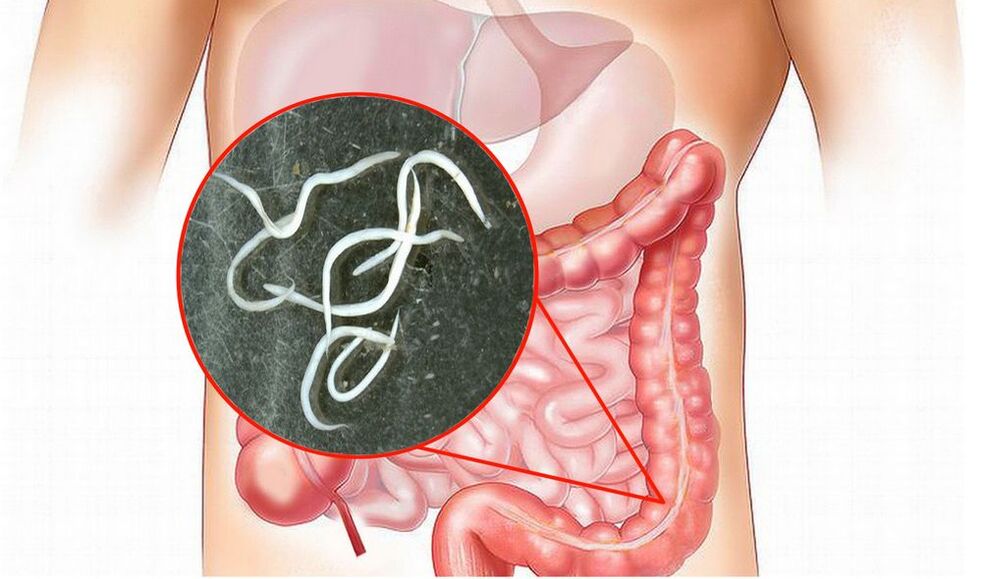
- Intestine.In the human intestines, ascariasis, enterobiasis, hookworm disease, trichuriasis, strongyloidiasis, trichostrongyloidiasis, diphyllobothriasis, taeniasis, taeniarynchosis, hymenolepiasis, etc.its pathogens are parasitic.
- Extraintestinal.Extraintestinal helminths can live in the liver, gall bladder, blood vessels and subcutaneous tissue.Extraintestinal parasitoses include filariasis, dracunculiasis, opisthorchiasis, schistosomiasis, fascioliasis, clonorchiasis, paragonimiasis, trichinosis, cystocercosis, etc.
In addition, according to the localization principle, luminal (including intestinal) and tissue (skin and visceral) helminthiasis are distinguished.
Symptoms of helminthiasis
The clinical picture of helminthiasis is very diverse and consists of a general reaction of the immune system in response to parasite invasion and organ-specific changes.During helminthiasis, acute or early stages (from 2-3 weeks to 2 months) and chronic stages (up to several years) are distinguished.The main pathological effects of helminths on the human body include toxic-allergic reactions, mechanical damage to organs and tissues, nutritional and vitamin deficiency, and reduced immunological competence.
Acute phase
In the acute period of helminthiasis, the main manifestations are caused by the toxic-allergic effect of parasitic worms on the body.Patients experience fever, rash, myalgia, and lymphadenopathy.Abdominal syndrome (dyspepsia, abdominal pain), pulmonary syndrome (dry cough, bronchospasm, shortness of breath), hepatolienal syndrome (enlargement of the liver and spleen), asthenovegetative syndrome (apathy, fatigue, sleep disorders, irritability) often develop.
Chronic phase
In the chronic phase of helminthiasis, organ-specific changes dominate, which are mainly caused by mechanical trauma to the site of the helminth parasite.Thus, during intestinal helminthiasis, dyspeptic disorders and abdominal pain are the determining factors.Violation of absorption processes in the intestine is accompanied by polyhypovitaminosis and progressive weight loss.Iron deficiency anemia is a frequent accompaniment of intestinal helminthiasis.In case of massive helminthic infection, rectal prolapse, hemorrhagic colitis and intestinal obstruction are possible.
In the chronic phase of helminthiasis, which is associated with primary damage to the hepatobiliary system, obstructive jaundice, hepatitis, cholecystitis, cholangitis, and pancreatitis may occur.In case of migration of pinworms during enterobiasis, the development of persistent vaginitis, endometritis and salpingitis is possible.
The chronic stage of strongyloidiasis occurs with the development of gastric and duodenal ulcers.In the case of trichinosis, the cardiovascular system (myocarditis, heart failure), the respiratory system (bronchitis, bronchopneumonia) and the central nervous system (meningoencephalitis, encephalomyelitis) may be affected.Due to the invasion of lymphatic vessels by filariasis, filariasis often develops lymphangitis, lymphedema of the extremities with swelling of the mammary glands and genitals.In echonococcosis, cysts of the liver and lungs occur, and when they multiply, complications are possible in the form of purulent peritonitis or pleurisy.
Against the background of helminthiasis in children and adults, the effectiveness of preventive vaccination and revaccination decreases, as a result of which the necessary protective level of immunity cannot be achieved.In the presence of simultaneous diseases, helminthiasis modifies and aggravates their course.The result of helminthiasis can be recovery (with natural death or expulsion of the intestinal worm) or residual phenomena, often with disabling consequences.
Diagnostics
Based on clinical and epidemiological data, helminthiasis is mainly diagnosed in the chronic stage.Special laboratory methods are used to identify the causative agent of helminthiasis: microhelminthoscopy (enterobiasis scraping), helminth ovoscopic (examination of feces for worm eggs), helminth larvoscopic, serological (ELISA, RIF, RSK, RNGA), histological coprology.Test material for the detection of fragments of eggs, larvae or adult helminths can be feces, vomit, duodenal contents, sputum, urine, blood, skin biopsy, etc.
In case of enteritis, skin allergy tests with roundworm antigens are informative.Instrumental diagnostics are widely used to identify and assess the severity of organ-specific changes: liver ultrasound, pancreas, FGDS, colonoscopy, endoscopic biopsy, X-ray and CT examination of internal organs, liver scintigraphy.
Treatment of helminthiasis
A holistic approach to the treatment of helminth infections consists of etiotropic and syndromic therapy.Specific treatment includes the prescription of anthelmintic drugs, taking into account the type of helminth and the stage of invasion.The effectiveness of deworming is evaluated based on the results of a repeated parasitological examination.The following drug groups are used for the etiotropic treatment of helminthiasis:
- antinematode
- anticestodiasis
- against trematodes
- broad spectrum drugs.
In the case of enteritis, antibacterial drugs, enterosorbents, enzymes, probiotics, etc. are used for the main treatment.Symptomatic therapy of helminthiasis may include the prescription of antihistamines, intravenous infusions, vitamins, cardiac glycosides, NSAIDs, and glucocorticoids.In the case of echinococcosis, the main treatment method for patients is surgery (liver cyst/abscess surgery, echinococcectomy).
Prevention
Geohelminthiasis is prevented by hygiene education of the population, protection of the environment from faecal contamination and implementation of personal hygiene rules in children.In terms of preventing the spread of biohelminthiasis, an important role is played by the deworming of domestic animals, the veterinary control of the sale of meat products, and the careful heat treatment of meat and fish.In the prevention of contact helminthiasis, the most important thing is to break the transmission mechanism of pathogens in organized groups, especially in children.Seasonal drug prevention of helminthiasis in families (e.g. albendazole), regular parasitological examination of children and risk groups is advisable.